
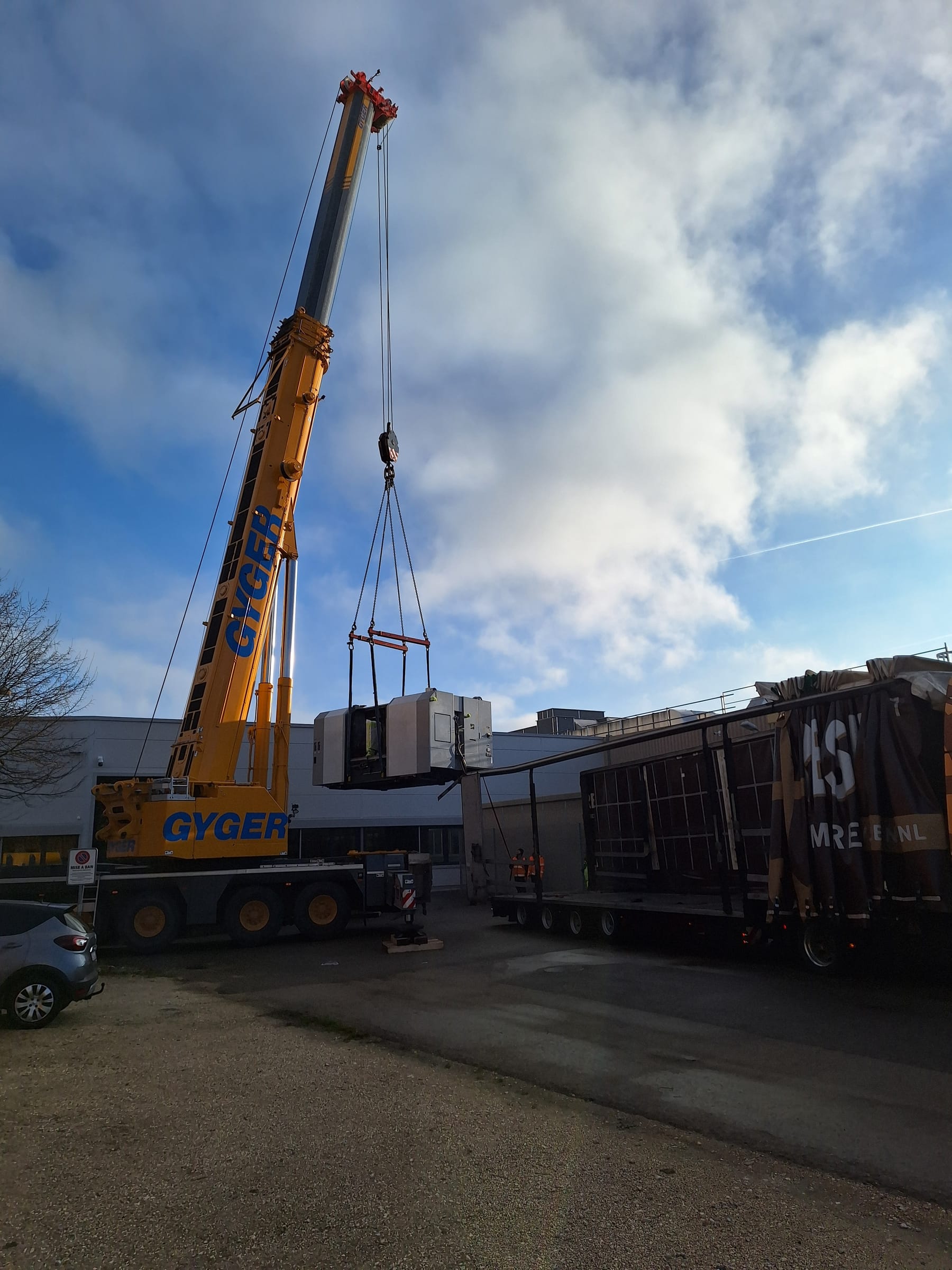
Gyger crane lifting a machining center inside the workshop

SITUATIONS

Workshop Upgrade: Trade-In or Direct Sale of Your Old CNC Machine?

Non-binding first estimate, usually within 24 hours on working days. Direct purchase: payment before pickup. A service by MBR — active since 2020 in 15+ countries.

When you’re upgrading your workshop and replacing an old CNC machine with a new one, you typically have two options: trade the old machine in when you buy the new one, or sell it separately and use the proceeds however you like. In most cases, a direct sale delivers a significantly better financial result — as long as you time it right.

The problem with trade-ins

When a machine manufacturer or dealer sells you a new machine and takes your old one as trade-in, they’re really running two transactions at once: selling the new machine and buying your old one. The catch is that when buying your old machine, they price in three risks they wouldn’t face on an unhurried direct purchase:

Remarketing risk: they don’t know how fast, or at what price, they’ll be able to resell your machine. Capital tied up: they’re financing the time between buying it and reselling it. Unknown condition: they’ve inspected your machine less thoroughly than a specialized buyer would.

The result: trade-in credit is often below the real market price. That’s not a scam — it’s the cost of convenience and a simple, single-step transaction.

If you don’t need that convenience, you can skip the discount.

Direct sale: the better model for an upgrade

Step 1 — Determine the old machine’s market value: we value it for free and deliver a realistic indication of the price. That gives you solid ground to negotiate with the new-machine dealer — and tells you whether their trade-in offer is fair.

Step 2 — Decide: if the dealer’s trade-in value is close to market price, take it. If it’s well below, sell direct to us and buy the new machine separately.

Step 3 — Execution: we buy the old machine and coordinate pickup around your production schedule. The proceeds are available to help finance the new machine.

What you gain, concretely, from selling direct

SituationTrade-inDirect sale
Worked example A: assumed market value €95,000€65,000–75,000 credited€95,000 cash
Worked example B: assumed market value €55,000€38,000–42,000 credited€55,000 cash

Worked examples with assumed figures, not market prices and not guarantees. Real prices depend on condition, spindle hours, and options.

When a trade-in still makes sense

There are legitimate scenarios where a trade-in is the better choice:

Manufacturer promotions: some manufacturers offer very high trade-in credit for a limited time as a sales incentive. If the offered value beats our market price (rare, but possible), take it.

Time pressure with no alternative: if you have no buffer and production and the upgrade land on the same date, a trade-in is sometimes the only practical path.

A complicated machine: if your machine is highly specialized and we can’t be confident how fast or at what price we could remarket it, we’ll give you a correspondingly conservative offer — in that case, a manufacturer’s trade-in might be better, since they know that niche market better.

Get our valuation anyway before deciding. It costs you nothing and gives you a reliable basis for the decision.

Get a free valuation of your machine for upgrade planning — no obligation.

Move on from your situation with a specific offer.

Factory clearance, insolvency, leasing, plant relocation… Non-binding first estimate, usually within 24 hours on working days. Specific offer after review. Direct purchase: bank transfer before pickup.

FAQ

Frequently Asked Questions

What's the difference between a trade-in and a direct sale?

With a trade-in, the machine dealer or manufacturer takes your old machine as part payment for a new one. The trade-in credit they offer is often below the machine's actual market value — the dealer prices in their remarketing risk and their margin. Selling direct to us gets you the real market price without that discount. The result is usually better — even once you use the proceeds separately to fund the new machine.

Are there cases where a trade-in still makes sense?

Yes: if the manufacturer of the new machine is offering a very high trade-in credit as a sales incentive, if you don't have time to run two transactions in parallel, or if the schedule requires everything to happen simultaneously. Get our valuation anyway — that way you know whether the trade-in offer is fair.

How fast can we get proceeds from a direct sale into financing the new machine?

Fast: you'll have an initial assessment. The offer usually follows within 24–48 hours on working days once we have all the information. Payment happens before pickup. From first contact to pickup usually takes 7–15 working days — fast enough to build your new-machine financing around it.

Do you buy the old machine before the new one is even delivered?

Yes. We coordinate the pickup date so production isn't interrupted: either we pick up the old machine shortly before the new one is delivered (if you can keep that sequence tight), or we agree on a date that works for you — even if that's weeks after the sale.

What can I actually save by selling direct instead of trading in?

It depends on your equipment. As a worked example with assumed figures (not a market price): a machine has an assumed market value of €55,000. A machine dealer selling you a new unit might offer €38,000–42,000 as trade-in credit. In this example, the €13,000–17,000 gap would be your advantage from selling direct — before tax.

How is the timing between the old and new machine coordinated?

We know this transition and have guided many customers through it. Tell us the planned delivery date for the new machine — we'll schedule our pickup to keep production downtime as short as possible.

Does this work if the new machine is also a used one?

Absolutely. The same principle applies if you're upgrading from an older machine to a newer used one. You sell the old one to us and buy the newer one separately. This is especially useful if you're buying the newer machine through a different dealer or directly from another shop.

How many machines can I sell at once?

No upper limit. Shops upgrading multiple machines typically sell us 3–8 units at once. That simplifies logistics, and we usually put together a package offer that's easier for everyone to handle.

Do the machines being sold need to still be operational?

Ideally, yes — running machines fetch better prices. But we also buy idle or faulty machines: we assess the actual condition realistically and make a concrete offer.

Are there special financing arrangements for the new machine?

If you're financing the new machine through a lease or bank loan, the proceeds from selling the old machine outright can serve as your equity contribution — reducing the financed amount and the total interest cost. Talk this through with your financing partner; we provide the documented purchase price for the old machine.

Part of the MBR Group

Request received

Thank you — we have received your request.

We will send a non-binding first estimate, usually within 24 hours on working days.

Urgent? Call us directly: