
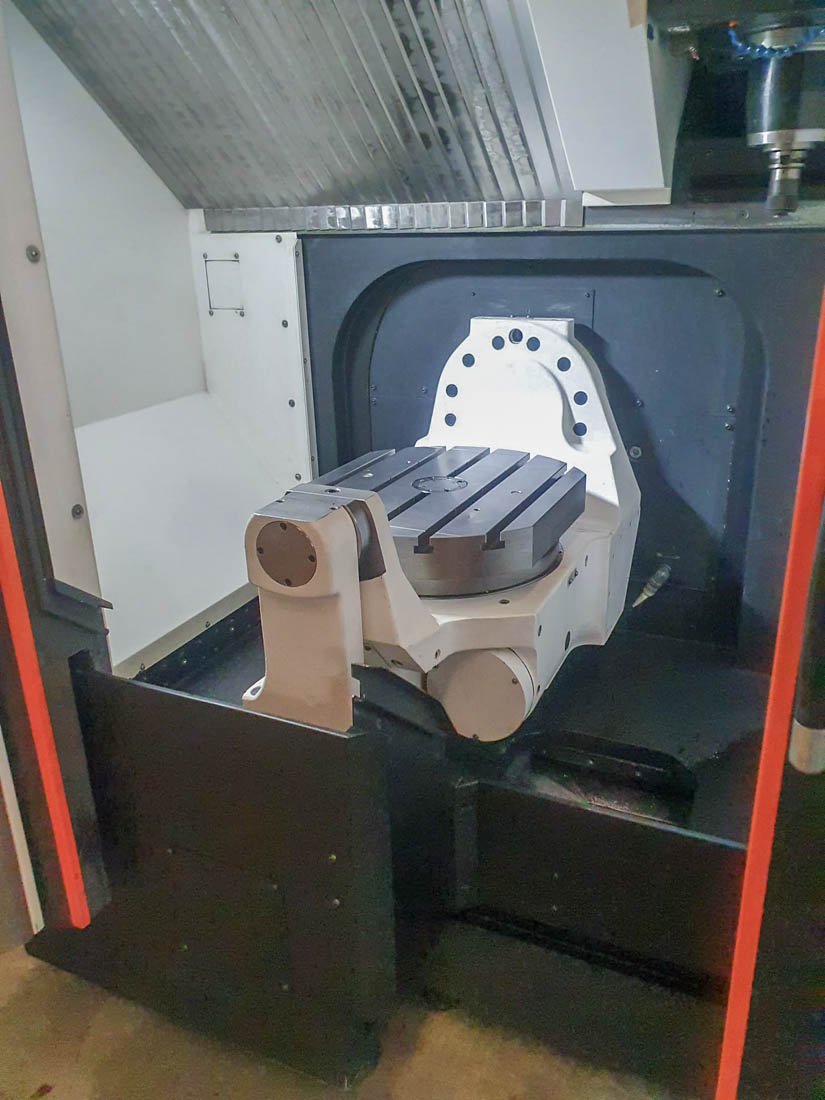
Germany’s automotive supply industry is going through the biggest transformation in its history: combustion-engine lines are being decommissioned, e-mobility lines are being built, and entire sites are being restructured. This shift is driving the most active secondary market for used CNC machine tools anywhere in Germany right now. We regularly buy complete lines from this segment — HMC-FMS cells with 5 to 25 machines, multi-spindle lathe systems, grinding and honing lines — with a direct connection to end buyers in Mexico, India, Turkey, Brazil, and Eastern Europe.
Initial assessment, heavy-lift logistics up to 100 t per machine, disassembly organized in parallel for tight clearance deadlines, and confidential handling during ongoing corporate communications.
Germany’s automotive supply industry in numbers
The automotive industry is one of Germany’s largest industrial sectors. The automotive industry and its supply chains employ several hundred thousand people nationwide and generate a significant share of German industrial output. The machine base is correspondingly dense. The key OEM sites and their surrounding clusters:
Lower Saxony — the VW Group axis. Wolfsburg (main plant), Hanover (commercial vehicles), Salzgitter (engines), Kassel/Baunatal (transmissions), Braunschweig (components). Tier 1 suppliers are densely concentrated around these sites. Currently under intense restructuring due to the Trinity program and the ID family.
Saxony — VW Mosel/Zwickau and the Chemnitz cluster. Zwickau is a central EV site in the VW Group (MEB). Numerous Tier 1 suppliers with a combustion-engine legacy surround it.
Baden-Württemberg — Mercedes-Benz and Porsche. Sindelfingen, Untertürkheim (engine plant), Mannheim (Daimler Trucks), Stuttgart-Zuffenhausen (Porsche). Bosch’s home plants in Stuttgart-Feuerbach, Schwieberdingen, Renningen. The Mahle Group in Stuttgart. Massive concentration of Tier 1 and Tier 2 machine stock.
Bavaria — BMW and Audi. Munich (BMW main plant), Dingolfing (BMW large-scale plant), Regensburg (BMW), Ingolstadt (Audi), Neckarsulm (Audi). Key clusters: powertrain component manufacturing, steering and chassis components.
North Rhine-Westphalia — Ford and the Mittelstand. Ford Cologne (currently undergoing a strong shift to e-mobility), numerous mid-sized Tier 1 suppliers in the Bergisches Land, the Sauerland, and the Aachen area (see our machine catalog for the full range of machine types and brands we buy in the region).
Hesse — Opel and the Mittelstand. Opel Rüsselsheim and Stellantis structures. Aumovio (formerly Continental Automotive) and the Daimler supplier network in the Rhine-Main region.
Saarland — Ford Saarlouis. Ford ended vehicle production there in November 2025; part of the workforce remains in the parts and components business.
The e-mobility transition as the main sales driver
The shift from combustion-engine to e-mobility production is the dominant driver of secondary-market machine movements in Germany. Concrete effects:
Combustion-engine components are coming free. Engine block manufacturing, cylinder head manufacturing, crankshaft machining, camshaft grinding, connecting rod machining, injection pump manufacturing, turbocharger components, exhaust system machining. Group-wide strategic decisions to exit combustion engines (such as VW’s Trinity initiative or BMW’s NEUE KLASSE) signal the pace at which these lines are coming free.
International demand absorbs it. India (Tata, Mahindra, Hero), Mexico (FCA, Nissan-Renault, Stellantis), Brazil (VW do Brasil, Ford do Brasil, GM do Brasil), Turkey (Tofaş, Ford Otosan, Toyota Türkiye), Morocco (Renault-Nissan, Stellantis), and Eastern Europe (Škoda Mladá Boleslav, Stellantis Poland, Hyundai Czechia) continue to expand combustion-engine production. These markets have capital and buy entire lines.
E-mobility creates demand for other machines. New lines for stators, rotors, and battery-pack and electric-motor-housing components are currently driving high investment demand — but they’re different machine classes (often stamping presses for electrical steel, winding machines, new HMCs with turning capability for motor housings). Some of these lines are built using modified combustion-engine machines, creating a further market for adapted equipment.
Typical machine classes from automotive fleets
| Machine class | Typical models | Main application in the industry |
|---|---|---|
| HMC machining centers with double pallet | DMG MORI NHX 4000/5000/6300, Mazak HCN 5000/6000/8800, Heller H-series, Grob G350/G550 | Engine block, cylinder head, transmission housing machining |
| FMS cells / pallet pools | DMG NHX lines + PH pool, Mazak Palletech, Fastems, Liebherr | Complete component-family lines |
| Multi-spindle lathes | Index MS series, Traub TNL/TNX, Tornos Multi Alpha, Schütte SF/SC | Steering components, brake parts, small-part high-volume production |
| Honing machines | Nagel ECO, Nagel V series, Sunnen SV/SH series | Cylinder bores, connecting-rod bores, tappets |
| Shaft grinding machines | Junker JuCrank, Boehringer NG350, Kapp Niles, Mikrosa | Crankshafts, camshafts, transmission shafts |
| Deep-hole drilling machines | TBT ML series, Auerbach DM | Cooling channels in engine blocks |
| Stamping and forming equipment | Schuler MSP/Spritz, Bruderer BSTA, Müller-Weingarten | Body panels, large-part forming |
| Injection molding machines | Arburg Allrounder, KraussMaffei MC/GX, Engel duo/victory | Plastic components, steering wheel molding, bumpers |
What makes this industry different when it comes to selling
Complete lines, not individual machines. Automotive clearances are rarely single-machine sales. What’s typical is an entire component-family line: 6 to 18 HMCs plus a pallet pool, tool-magazine management, a loading robot, and end-of-line measurement and inspection equipment. Valuing it as a functional unit is 15 to 35% higher than the sum of the individual parts, because the next buyer can put the line back into production without re-engineering it.
Timelines are group-driven. Clearance deadlines are often hard — a lease or property sale on a fixed date, other group sites waiting for the space, production shifting to a successor product on a fixed date. We deliver initial assessments and organize disassembly in parallel when several lines need to move at once.
Confidentiality toward the group and workforce. Decommissioning decisions are often only communicated internally after negotiations with the works council. We arrive in unmarked vehicles, with no company branding, and coordinate site visits with the communications lead. Confidentiality agreements before any data is shared — standard practice.
IATF 16949 documentation as a selling advantage. Machines from IATF-certified production carry continuous maintenance and calibration documentation. We pass this on to the next buyer — which significantly eases redeployment in another IATF-certified production environment. It’s a value factor we explicitly account for in the valuation.
Line engineering is handed over too. For complete FMS cells, we also hand over the line engineering — machine layout drawings, foundation plans, the cell’s electrical schematics, and the software state of the pallet-pool control. For the next buyer, that’s the difference between “buying machines and re-engineering the layout” and “rebuilding a finished cell.”
Special considerations in automotive buying
High-volume wear patterns on the machines. Automotive machines often have very high spindle hours (15,000 to 35,000) and correspondingly deep tool marks in the fixtures. That’s normal for this industry — and the secondary market factors it in. A machine from active production with documented maintenance is often worth more than an already-idle machine with lower running hours — especially if it sat idle longer than it actually produced.
Tooling logistics and fixtures. Automotive lines often carry large fixture inventories — jigs for specific component families, mounting adapters, customer-specific tool holders. These transfer with the line to the next buyer; without the fixtures, the line can no longer produce the original component family.
End-of-line measurement and inspection equipment. Measurement and test stations at the end of the line — coordinate measuring machines, comparator gauges, acoustic test stands, pressure and leak tests — are part of the line’s functional scope and are taken over with it. They have their own secondary-market value and are listed separately in the offer.
Residual fluids and auxiliary media. We drain hydraulic oils, coolants, and cutting oils in the line as part of disassembly. Disposal itself is handled by a certified waste disposal company, which we can engage and coordinate on your behalf if you wish — that company issues the certificates required under German waste law directly to you. The site operator remains the waste producer. More at factory clearance.
What we especially like to buy from automotive fleets
- DMG MORI NHX lines with pallet pools: NHX 4000/5000/6300 with 6 to 16 pallets and tool magazines from 120 stations. Very active secondary market in India and Mexico.
- Mazak HCN lines: HCN 5000 II, HCN 6000 II, HCN 8800 with Palletech pool. Preferably with MAZATROL SmoothG or SmoothX.
- Heller H-series: 4-axis machining centers — especially for powertrain components. Highly sought after in Hungarian, Slovak, and Czech Tier 1 plants.
- Grob G-series: G350, G550, G750 for powertrain — the German specialty whose main buyers on resale are in Brazil, Mexico, and India.
- Multi-spindle lathes: Index MS series, Traub TNL18/TNX/TNK, Schütte SF, Tornos Multi Alpha. For steering and brake components in medium and high-volume series.
- Grinding and honing lines: Junker JuCrank for crankshafts, Boehringer NG350/NG500, Nagel ECO honing machines.
- Complete FMS cells with DMG, Mazak, Heller, or Grob as the base machines — the highest-value single items in the automotive secondary market.
Process for an automotive line purchase
- Confidentiality agreement before any data is shared — standard in this industry.
- Line description + layout. Machine list, layout plan, pallet-pool specification, tool-magazine configuration, overview of end-of-line measurement and inspection equipment. Maintenance history and IATF documentation as a value advantage.
- Non-binding valuation. For lines with 5 or more machines, with an on-site inspection.
- On-site inspection with a multi-person team — spindle diagnostics on sample machines, completeness check of tooling and fixtures, software-version audit of the pallet-pool control, geometry reports.
- Offer. Broken down by machines, fixtures, tooling, and measurement/inspection equipment. Valid for seven days.
- Contract, payment, parallel disassembly. Funds received in your account before work begins. Disassembly organized in parallel when the deadline is tight. Heavy-lift logistics with oversize/heavy-load transport permits from the relevant road traffic authority.
Request a confidential valuation of your automotive lines. Initial assessment, in writing, with corporate-grade confidentiality.