
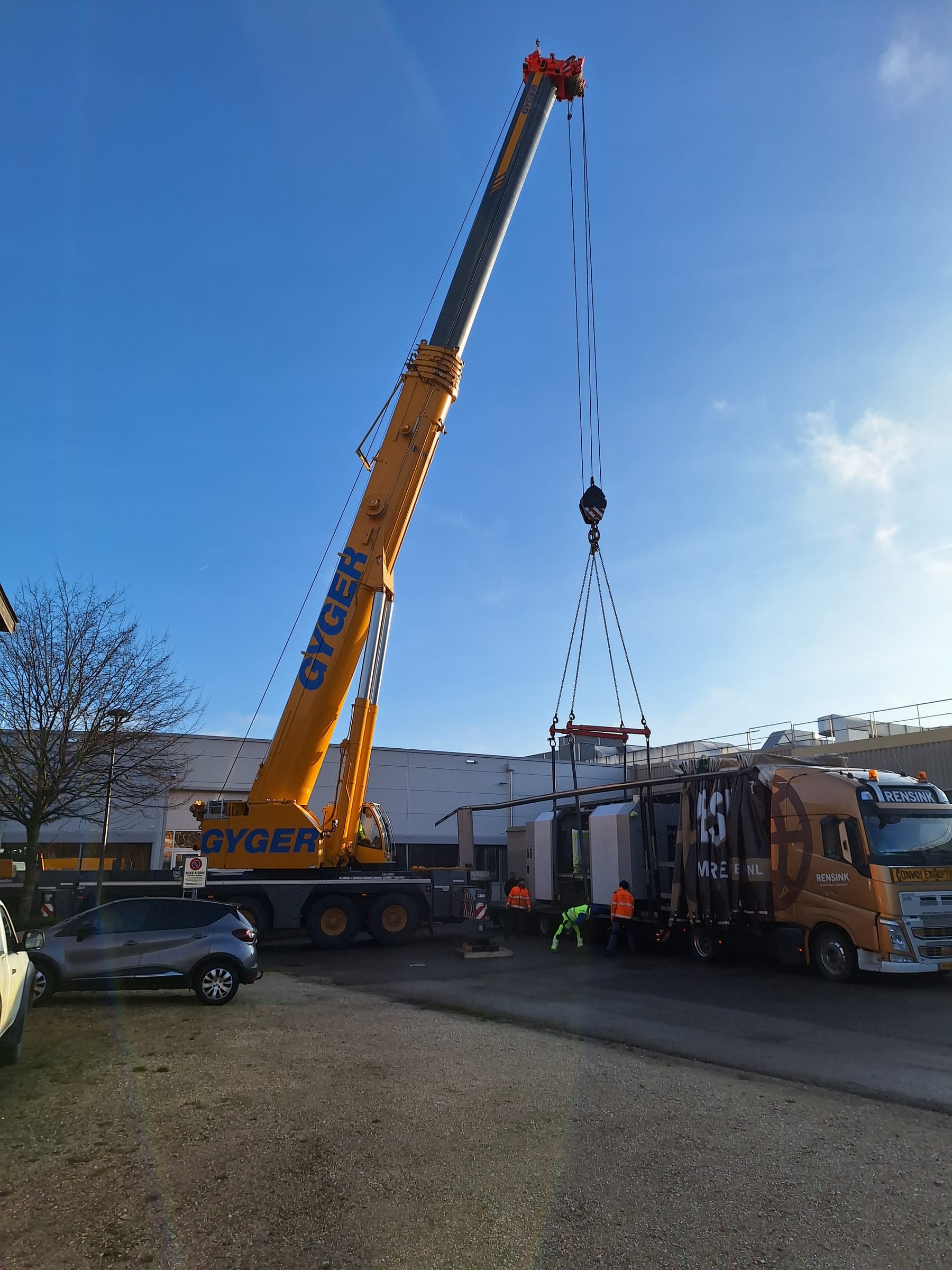
Gyger loading a CNC machine onto a Rensink specialist transport

SITUATIONS

Selling Idle Machines: Turn Unused Assets Into Liquidity

Non-binding first estimate, usually within 24 hours on working days. Direct purchase: payment before pickup. A service by MBR — active since 2020 in 15+ countries.

Idle CNC machines aren’t worthless scrap. They’re capital tied up in fixed assets that cost you floor space, generate insurance costs — and often still carry significant market value, if you know the right buyer.

Whether a machine has been down for months because of a control-system alarm, is no longer needed due to reduced orders, or the business has simply moved to newer technology — we make a realistic offer that matches the machine’s actual condition.

Why idle machines still hold value

A CNC machine is made up of several value components, and they don’t all fail at once:

Machine bed and frame: a high-quality cast-iron structure that barely deteriorates just from sitting. The frame of a Hermle C42, a DMG MORI NHX, or a Mazak Integrex holds its value even after years of downtime.

Ways and drives: ball screws, linear guides, and servo drives are robust against downtime, as long as they were properly preserved. The critical risk: loss of lubrication over an extended period.

CNC control: a Siemens 840D SL, a Heidenhain TNC 640, or a FANUC 30i carries its own market value — even if the machine as a whole isn’t running. Spare parts for known control systems are available globally.

Tool magazine and automation components: tool changers, pallet systems, and feed automation can be marketed separately if the machine itself doesn’t find a buyer.

The most common reasons machines sit idle

Reduced capacity demand: orders dropped and the machine simply wasn’t needed anymore. Often the best time to sell — the machine is still in good condition, just unused.

Technology transition: a new generation was purchased and the old one sits next to it. This is the most common case — and the idle machine is often still good enough for a buyer who doesn’t need the latest generation.

Known fault: spindle failure, a failed control board, a defective axis motor. These machines still hold value — the fault gets priced in.

Unknown fault: the machine won’t start and the cause is unclear. We inspect on site or make an offer with a corresponding risk discount.

A discontinued business line: the company has wound down a production area. Machines from that area are often still in good shape — they simply weren’t run into the ground before being parked.

How downtime affects the price

DowntimeTypical impactRecommendation
Under 3 monthsMinimal (0 to −5%)Sell now
3–12 monthsSmall (−5 to −15%)An on-site inspection is worthwhile
1–3 yearsModerate (−15 to −30%)An on-site inspection is needed
Over 3 yearsSignificant (−30 to −50%)An on-site inspection is essential

The value keeps eroding, but you can stop it: sell now and you get more than if you wait another year while the machine keeps aging and losing value.

Selling capacity you no longer need

Sometimes a machine sits idle not because of a fault, but simply because the capacity isn’t needed anymore. That’s not a bad starting point for a sale — it’s the best one. A functional, well-maintained machine that was simply parked achieves market prices close to its true value.

The capital tied up in a machine like that could be working elsewhere. If you want to know what your unused capacity is worth, we’ll give you a clear answer.

Get your idle machines valued now — faulty machines included.

Move on from your situation with a specific offer.

Factory clearance, insolvency, leasing, plant relocation… Non-binding first estimate, usually within 24 hours on working days. Specific offer after review. Direct purchase: bank transfer before pickup.

FAQ

Frequently Asked Questions

Do you buy CNC machines that have been sitting idle for months or years?

Yes. An idle machine has a different market price than one actively in production — but it has a price. We check the control system, spindle, axes, and visible condition on site, and make an offer that matches the actual state. Rule of thumb: the longer a machine has been idle, the more an on-site inspection matters before we can offer.

Can a machine that's been idle for 2 years still hold value?

Yes. Mechanically well-built machines (cast-iron frames, hardened ways) barely deteriorate just from sitting. What does suffer: the lubrication system (dries out), seals (go brittle), electronic components (capacitors, relays), coolant (contamination). These are all repairable issues, and they factor into our valuation as a calculable risk.

Does the machine need to be started up again for the valuation?

Ideally, yes — a short test run gives us the most reliable basis for a valuation. For machines that can no longer do that, we value based on visual condition, known fault patterns, and general upkeep. The uncertainty discount is correspondingly higher — but we still make an offer.

What's a typical price discount for an idle machine versus a running one?

It depends on why the machine is down. A control-system alarm with a known cause (e.g., a battery fault, a position error after a collision): −10 to −20%. A known, calculable mechanical fault: −20 to −40%. Unknown cause, machine won't start: a risk discount of −30 to −50%, but still a real offer.

We have older capacity we'll never use again. Is it worth selling?

In most cases, yes — even at a lower price. An idle machine costs you floor space (according to Realogis 2025, existing logistics space in Germany averages €5.28 to €6.58/m² per month, minimum to peak rent across 33 German industrial and logistics markets), generates ongoing insurance costs, and sometimes requires upkeep. On top of that, CNC machines lose value as they age, especially once the control-system generation becomes outdated. The sooner you sell, the better the price.

Do you buy entire pools of idle machines?

Yes, and it's actually common. If a business is selling several idle units at once, we make a single offer for the whole lot — simpler to execute, and less work for you than individual sales.

What happens to machines that really have no resale value left?

We appoint a certified waste management contractor on request. That contractor handles disposal — for oils, coolant, electrical components, and scrap — and issues the legally required documentation (under German waste law, KrWG, and its proof-of-disposal ordinance, NachwV) directly to you. As the owner, you remain the legal waste producer of record. We try to offset the disposal cost within the overall lot, so you don't get a separate bill.

Are there machines you definitely can't pay anything for?

Yes: machines with no control system (just a mechanical frame with no electronics), machines with total mechanical failure (a destroyed frame, broken major components), proprietary specialty machines with no identifiable buyer market, or very old machines using technology incompatible with today's buyers. In those cases we'll say so honestly — and appoint a certified waste management contractor on your behalf if you want.

What's the first step if I want to sell idle machines?

Send us a list with make, model, year built, and any known fault or defect, plus two or three photos per machine. We'll tell you which machines are worth an on-site inspection and which ones we can already give a remote estimate for.

Do you buy machines with a known spindle failure?

Yes. A spindle failure is the most common known fault pattern in idle machines. The machine frame, ways, axis drives, and control system retain significant value — even if the spindle needs replacing. We calculate the cost to restore it and make an offer accordingly.

Part of the MBR Group

Request received

Thank you — we have received your request.

We will send a non-binding first estimate, usually within 24 hours on working days.

Urgent? Call us directly: