
You have an industrial facility that needs to be cleared and you don’t know where to start: heavy machinery, hazardous materials, fixed installations, tight deadlines, and the daily cost of keeping the facility running. We coordinate the entire process — valuation, purchase, disassembly, transport, and appointing a certified waste management contractor — through a single point of contact and a single overall offer whose conditions are stated upfront, aimed at leaving you with a cleared facility.
Your situation: when a facility needs clearing and the clock is ticking
Clearing an industrial facility is one of the most demanding tasks a company faces when winding down its fixed assets. It’s nothing like selling a single machine: there are dozens of machines and pieces of equipment of wildly different types and values, waste that requires specific documentation, fixed installations that need their own disassembly technique, and a deadline — often non-negotiable — set by the lease, the property transaction, or the closure process itself.
According to the Realogis market analysis for 2025 (33 German industrial and logistics markets, published February 2026), the average minimum rent for existing logistics space was €5.28/m² and the average prime rent €6.58/m² per month; new-build space and top locations cost more. As a worked example, a 1,000 m² facility comes to roughly €5,300 to €6,600 per month (1,000 m² multiplied by €5.28 and €6.58 respectively); the actual rent for a specific building can differ. Every week of delay in clearing it is money that’s gone for good.
Beyond rent there are hidden costs: insurance that keeps running, minimum utilities to maintain power and water for the building, security costs when valuables sit unguarded, and the time of the manager responsible for coordinating contractors, agents, haulers, and buyers separately.
The alternative that avoids all of that is a complete clearance from a single provider.
How a facility clearance works: from site visit to offer
The process starts with a technical site visit, usually within 3–5 days of first contact. Our team builds a complete inventory of every asset on site: machines, tooling, furniture, fixed installations, and waste. Each item goes into one of three categories:
Assets with market value: CNC machines, lathes, milling machines, machining centers, industrial compressors, overhead cranes, measuring equipment. We buy these and pay for them.
Assets with no resale value but still usable: old tooling, worn workshop furniture, outdated equipment. Donation, sale through third parties, or recycling are the options here.
Waste: handed to a certified waste management contractor, which we arrange on your behalf if you want. That contractor handles disposal and issues the certificates to you directly.
The total price of the clearance comes from offsetting the value of the machines and equipment we buy against the cost of waste disposal. Where the machines carry enough value, the result for the owner can be positive: you get paid for the machines. Whether disassembly and transport are offset against that value or listed separately is stated in the offer upfront.
We present our overall offer after the visit, usually within 48 hours on working days. If you accept, we sign a purchase agreement and set a pickup calendar with firm dates.
What happens with heavy machinery and fixed installations?
This is the part that worries owners most, and where the biggest differences between providers show up.
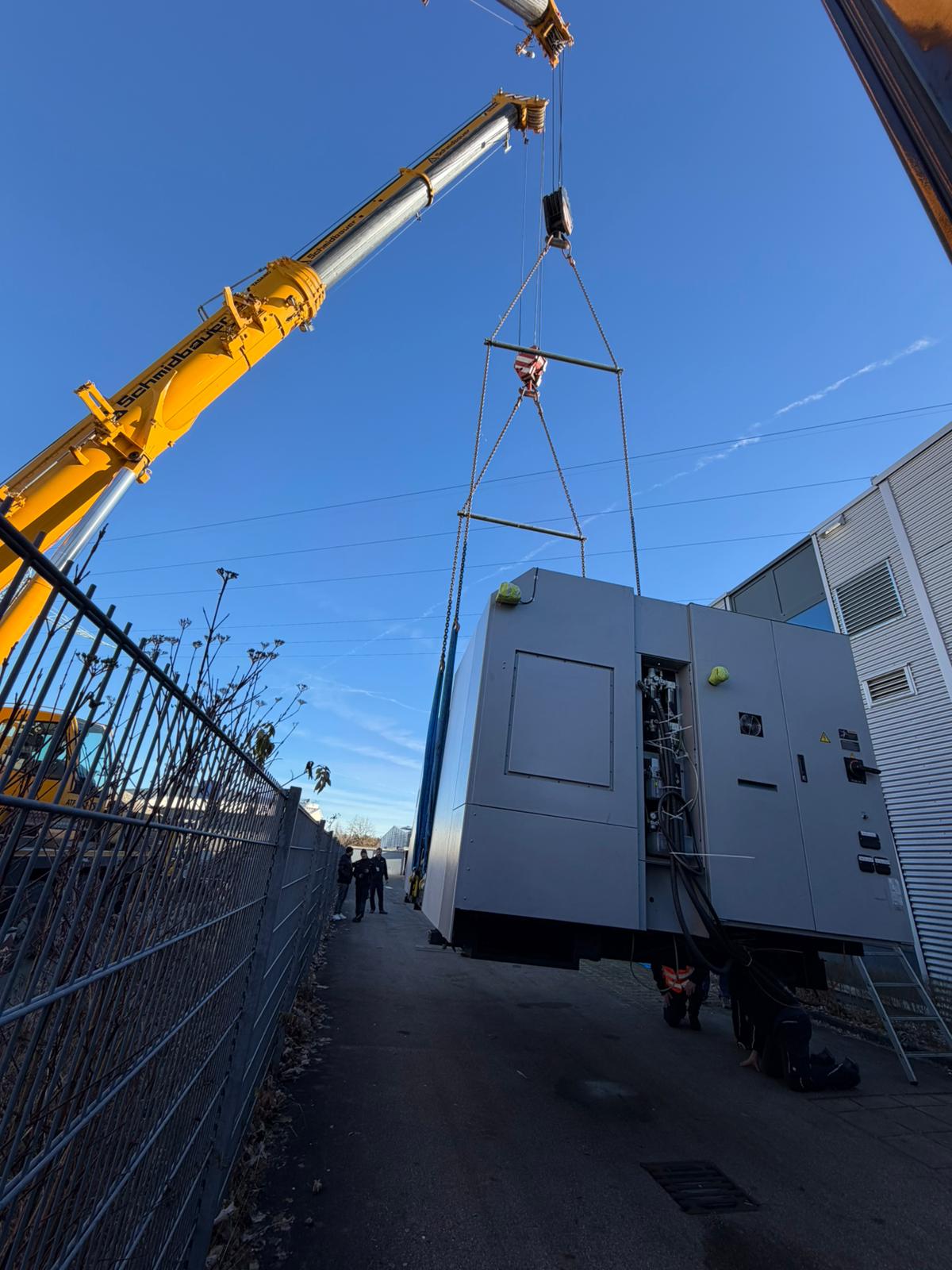
We organise dismantling for machines of every size. For heavy machinery between 20 and 100 tonnes, lifting equipment such as mobile cranes, chain hoists, and low-friction transport dollies is used to keep disassembly safe without structural damage to the building.
For gantries, overhead cranes on rails, and other fixed installations anchored to the building structure, we develop case-specific disassembly technique. This is the part of the process that takes the most time and the part owners appreciate most: not having to deal with the problem of what to do with a 10-tonne overhead crane and its rails.
We also coordinate special transport — low-loaders, gooseneck trailers, oversized loads with escort vehicles.
Environmental management: documentation that protects the owner
Industrial waste disposal in Germany is governed by the Recycling and Waste Management Act (KrWG) and the Proof of Disposal Ordinance (NachwV). Failing to comply isn’t just a fine: it can create liability for the owner even after the company has been sold or closed.
Important for clarity: we are not a certified waste disposal company and we don’t dispose of anything ourselves. We drain machine fluids as part of disassembly and appoint a certified waste management contractor on your behalf if you want. In practice, that looks like this:
- Hydraulic oils and cutting coolant (hazardous materials): we drain and package them, the certified contractor collects and disposes of them and issues the treatment certificate.
- Solvents and industrial cleaning products (hazardous materials): same process.
- Scrap metal (non-hazardous waste with positive value): collected and recycled. This often generates additional proceeds.
- Asbestos (if present in insulation or building elements): coordinated with a company specifically licensed for that material.
- Electrical and electronic equipment (WEEE): handed to a licensed contractor under the EU directive.
The treatment certificates and disposal records you need for your legal obligations, the building handover, or future audits are issued to you directly by the certified waste management contractor. As the owner, you remain the legal waste producer of record — we organize the process, but we don’t act as the disposal company ourselves.
Documentation you need for the clearance
To get the process started, we need a minimal set of documents:
- Identification of the owner or responsible party: company registration number or the owner’s ID, plus power of attorney if you’re acting on behalf of a company.
- Building documentation: lease or title deed, so we know the deadlines and handover conditions.
- Existing inventory (if you have one): any list or inventory you have, even if it’s approximate or incomplete.
- Machine documentation (if available): manuals, technical data sheets, serial numbers. Useful, but not required.
For facilities involved in insolvency or closure proceedings, the additional documentation required depends on the court process; our team coordinates it with the insolvency administrator or your legal counsel.
Pricing and valuation for an industrial facility clearance
Valuing the machines in a clearance follows the same criteria as any other purchase: real market price, based on current comparable transactions. We don’t apply a discount just because it’s a clearance.
The value that offsets logistics costs comes from process efficiency: by buying the whole lot at once, we can absorb the disassembly and transport costs of less valuable assets against the margin on the more valuable machines. You get the market price for every relevant asset; how the logistics are offset is stated in the offer upfront.
For reference, here’s what doing this separately would mean: if the seller hires a specialist company directly to disassemble a machining line, special transport, disposal, and coordinating multiple providers come on top of that company’s disassembly costs. With our full-service option, we organise all of it, and the offer states upfront how disassembly, transport, and the waste contractor’s invoice are handled and offset against the value of the machines, before you sign.
In a clearance we’re coordinating riggers, cranes, flatbed trucks, waste contractors, and the facility’s electrical panel all at once. Extraction order matters: pull the wrong machine out first and you block access to the rest. We plan the clearance against the facility layout before we move the first machine.
Typical reasons for a facility clearance
Plant closure or business wind-down: the owner has a fixed deadline to clear the facility and needs maximum speed without compromising on price. We coordinate the process so the facility is cleared before the lease notice period ends, eliminating the daily cost of keeping the operation running. See also: How do I sell machines from a plant closure?
Plant relocation: the company is moving into a new facility and some machines aren’t coming with it. We buy the surplus before the main moving trucks arrive, cutting the volume and cost of the move. See plant relocation.
Property repurposing: an investor or developer acquiring an industrial facility for a new use (logistics, retail, residential conversion) needs an empty, documented building. We’re the right partner for that too.
Insolvency: with insolvency and machinery liquidation, the insolvency administrator needs a fast, documented, legally compliant process. We produce a prior valuation report, handle the sale of the assets, and appoint the waste contractor, who issues the disposal records directly for the court file.
Inheritance or family wind-down: when the heirs of an industrial business need to liquidate a facility’s assets to close out the estate, a single full-service clearance simplifies the process considerably. One agreement, one payment, complete documentation.
The advantages of a single-provider clearance
The alternative to a full clearance is organizing everything separately: one buyer for the CNC machines, another for the conventional lathes, a waste contractor for the oils, a disassembly company, another for transport. Each side negotiates its own piece, and the owner carries the entire coordination burden.
In practice that means months of coordination work, multiple visits from different potential buyers, parallel negotiations, assets that nobody wants to buy and that can’t be left behind, and the constant risk that one of the buyers drops out at the last stage and the whole schedule collapses.
With our full-service option:
- A single overall offer, with its conditions stated before anything starts.
- A single schedule with firm dates. You can commit to the building owner and know exactly when the facility will be cleared.
- A single point of contact. If something doesn’t go exactly to plan, there’s one person to call.
- Parallel coordination: we coordinate every front in parallel instead of one after another.
“Clearing an industrial facility always takes longer than the owner expects when they try to coordinate it themselves. Every machine has its own potential buyer, every waste contractor has its own deadlines, and if one piece falls through, the whole schedule slips. Our value proposition is simple: one agreement, one date, empty facility.” — Marcel Brockmann, CEO and co-founder of MBR
Geographic coverage
We operate across Germany and organise dismantling and transport wherever the facility is located.
Beyond Germany, coverage doesn’t change the process or the price: the offer you receive is the same no matter where the facility is located. We arrange pickup and export logistics wherever the machines are, through our buyer network spanning 15+ countries.
Request a free valuation for your facility clearance. We’ll be in touch with an initial plan. No obligation, full confidentiality.