
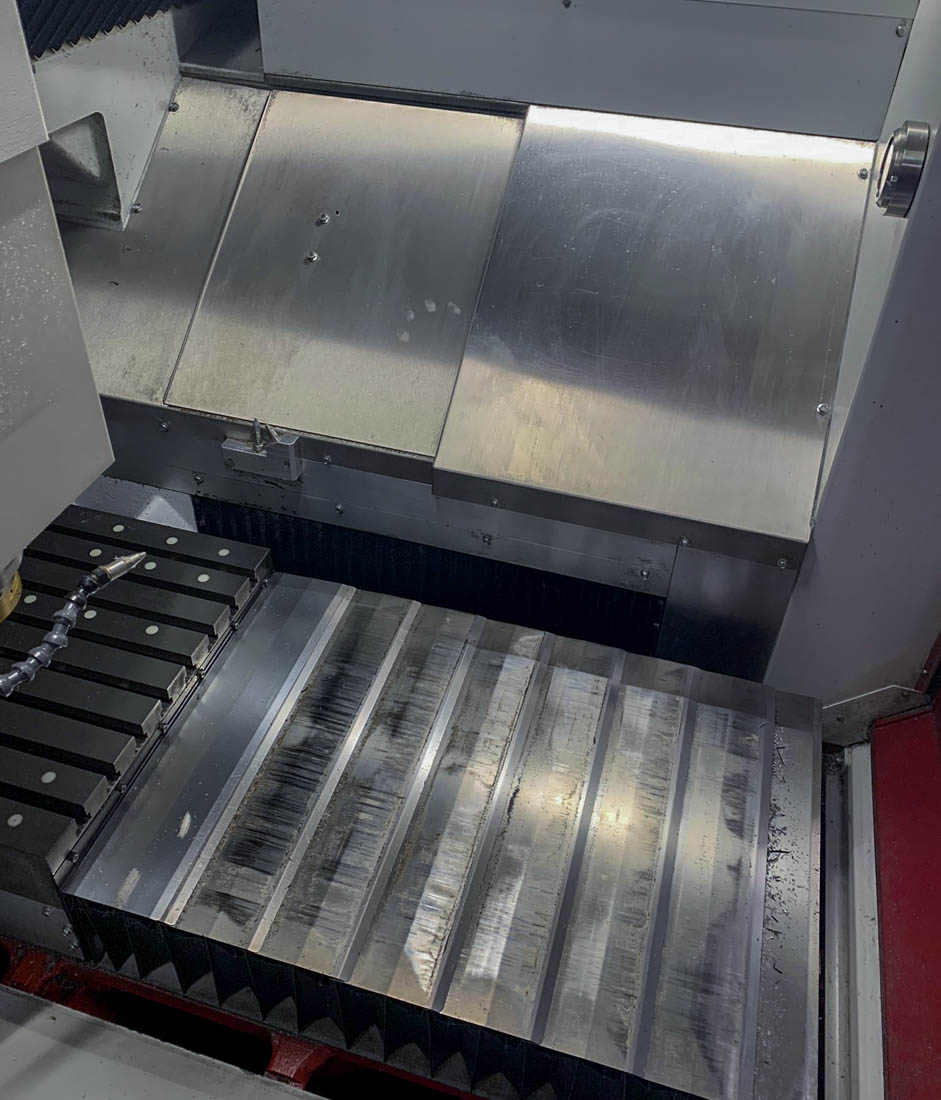
Röders RXP500 — detail of machine bed and mounting surface

MACHINE TYPES

Sell EDM Machines: Wire and Sinker EDM

Non-binding first estimate, usually within 24 hours on working days. Direct purchase: payment before pickup. A service by MBR — active since 2020 in 15+ countries.

EDM machines (Electrical Discharge Machining) are indispensable in tool and mold making as well as aerospace manufacturing. They machine hardened steels, carbide, and superalloys that can’t be worked with conventional cutting. Their secondary market is selective — but prices are stable once the right buyer is found.

We buy used wire and sinker EDM machines from all manufacturers, wherever they’re located.

Wire EDM versus sinker EDM: market profile

Wire EDM

The larger, more liquid market. Wire EDM machines are used for making stamping dies, injection molds, precision parts from hardened steel, and prototypes. Buyers are active worldwide — Europe, Asia, North and South America.

Key manufacturers and series:

GF Machining Solutions (formerly Charmilles): Robofil 290/390/440/640, CUT P series (current generation). CUT P machines (CUT P 350/550) are the current generation.

Mitsubishi Electric: FA-Advance series (FA10, FA20, FA30), Wire Expert. Very reliable, strong demand in Asia and Eastern Europe.

Fanuc: α-CiF series (wire), very robust and easy to maintain.

Sodick: AQ series, linear motor technology, high accuracy.

AGIE (now part of GF): Agiecut Sprint/Classic. Older but solid machines with an active buyer market.

Sinker EDM (die-sinking)

A specialized market — a smaller buyer pool, but higher individual prices for good machines. Buyers: tool and mold makers for injection molding, stamping die makers, and suppliers to medical technology and aerospace.

GF Machining Solutions: Form/Roboform series, Form P/E series (current generation). Agie: VERTEX, Agiejet. Solid older platform. ONA: AF series, QX series. Spanish brand with a good reputation in sinker EDM. Makino: EDGE 2, EDGE 3. Japanese quality, sought after in precision engineering. Mitsubishi: EA series. Sodick: AG series (AG40L, AG60L), linear motor technology.

Pricing (as of October 2026)

We have no reliable public price range for EDM machines: on the used-machinery marketplaces most listings are posted without a price, and for individual models there are not enough listings with a price. This applies to wire EDM (Fanuc, Charmilles Robofil and CUT P, Mitsubishi FA-Advance) as well as to sinker EDM (Sodick, Charmilles Form, ONA, Makino). Value is determined by year of manufacture, control generation, condition of the wire guides and dielectric system, operating hours and equipment. Initial assessment.

How we approach valuations: What is my CNC machine worth?

Value factors for EDM machines

Control generation: CUT P control (GF) commands significantly more than older Robofil/Charmilles generations. Mitsubishi Wire Expert and the FA-Advance control are more modern platforms than older operator interfaces.

Wire feed system: The wire feed system (wire guides, guide nozzles) is the equivalent of the spindle on machining centers for wire EDM machines. Worn or damaged guides significantly reduce cut quality.

Dielectric system: A well-maintained water dielectric (wire EDM) or oil dielectric (sinker EDM) reflects overall maintenance condition. Dirty filters, high water conductivity, and discolored oil are warning signs.

Accuracy at last measurement: A log from the last calibration run (positioning accuracy, cut-quality test cuts on a sample piece) is especially valuable on EDM machines.

Downtime: EDM machines idle for more than 6 months need a thorough inspection before resale. Condensation, dried-out seals, and oxidized contacts are the typical issues.

Disposal of dielectric fluids

Dielectric oil from sinker EDM machines is classified as hazardous waste under applicable waste-classification regulations (in Germany, waste code 120107 under the Abfallverzeichnis-Verordnung/AVV). Disposal must be carried out by a certified waste management company and documented with a disposal certificate (per NachwV in Germany). We drain the fluids as part of disassembly and, on request, arrange a certified disposal company for you — that company issues the disposal certificates directly to you. As the owner, you remain the waste producer under applicable law.

Dielectric water from wire EDM machines is less critical but must also be disposed of or treated correctly.

“EDM is a niche market that takes patience — but the right buyer pays a fair price. We bring the patience, and we pay right away.”

— Marcel Brockmann, CEO and co-founder of webuyyourmachinetools.com

Contact us with machine type (wire/sinker), manufacturer, model, year, control generation, and two to three photos.

Sell your EDM machine — request a free valuation

Model guides for the two most-traded current wire EDM series: Charmilles CUT P and Mitsubishi FA-Advance.

Sell your industrial machine. Free valuation.

Free valuation for Sell EDM Machines. Non-binding first estimate, usually within 24 hours on working days. Direct purchase: bank transfer before pickup.

FAQ

Frequently Asked Questions

What is my Charmilles Robofil 390 worth?

We have no reliable public price range for the Charmilles Robofil 390: on the used-machinery marketplaces most listings are posted without a price. Decisive factors: condition of the wire feed system, filter condition, conditioning state of the dielectric system, control version (CUT P vs. older Robofil generations), and whether the unit was still in regular use. Machines that have been idle longer require a risk discount.

Which EDM brands do you buy?

We buy wire and sinker EDM machines from all relevant manufacturers: GF Machining Solutions (Charmilles, System 3R), Mitsubishi Electric (EA/FA series), Fanuc (α-CiF, α-CiC), Sodick (AQ, AG), Agie (Agiecut, Agieset), ONA (AF, QX series), and Makino (EDGE series). Also older machines, as long as the control system still functions.

What is a Mitsubishi FA20 worth?

We have no reliable public price range for the Mitsubishi Electric FA20 Advance (wire EDM): on the used-machinery marketplaces most listings are posted without a price. The Mitsubishi line (FA-Advance, EA-series sinker EDM) has very robust mechanics and strong demand in Eastern Europe and Asia. Decisive factors: condition of the wire feed, wire cutting unit, and dielectric system.

Do you buy sinker EDM machines?

Yes. Sinker EDM machines (die-sinkers) from Charmilles (Form/Roboform), Agie (Agiejet, VERTEX), ONA (AF, QX), Mitsubishi (EA series), and Makino (EDGE) have a specific but stable secondary market. Buyers are mainly tool and mold makers. Please specify machine type, maximum workpiece size, and control generation.

How important is the condition of the dielectric system for the price?

Very important. The dielectric system (deionized water for wire EDM, dielectric oil for sinker EDM) reflects the overall maintenance condition of the machine. Contaminated filter systems, high water conductivity, or degraded oil signal neglect and raise the risk for every other component. Well-maintained systems typically achieve a better price.

How old can an EDM machine be for you to still buy it?

We buy EDM machines going back to the year 2000 — as long as the control still works and spare parts are available. GF Machining Solutions and Mitsubishi Electric support older machines with parts for a very long time. For very old units (pre-1998), the buyer market is more selective but still exists — especially in developing markets.

What happens with EDM machines that have been idle for a long time?

Common issues after a shutdown: condensation in the dielectric, oxidized contacts, dried-out seals in the hydraulic system. These are repairable but raise the risk. If a machine has been idle for more than 6 months, we either need a trial run on site or apply a risk discount. Contact us — we assess this case by case.

Do you buy EDM machines as a lot, e.g. from a facility closure?

Yes, that's actually typical for EDM acquisitions: toolmaking departments often have 3–8 EDM machines of various types and ages. We assess the lot as a whole and make a single offer. We organize disassembly and pickup; we drain the dielectric fluids as part of disassembly, and disposal itself is handled by a certified waste management company that we arrange for you on request — that company issues the disposal certificates directly to you. As the owner, you remain the waste producer under applicable law.

Can the dielectric fluids (oil, water) be disposed of as part of the purchase?

Yes. Dielectric oil is classified as hazardous waste and must be disposed of in accordance with applicable waste-management regulations (in Germany: KrWG/NachwV). We drain the fluids as part of disassembly; disposal itself is handled by a certified waste management company that we arrange for you on request — that company issues the disposal certificates directly to you. As the owner, you remain the waste producer under applicable law.

What is a Sodick AG40L worth?

We have no reliable public price range for the Sodick AG40L (sinker EDM): on the used-machinery marketplaces only a few listings are posted with a price. Value is determined by year of manufacture, operating hours, condition of the dielectric system and control, and equipment. Sodick is known for its direct-drive linear servo technology, which is mechanically extremely robust. Well-maintained Sodick machines retain their value about as well as Charmilles and Mitsubishi.

Part of the MBR Group

Request received

Thank you — we have received your request.

We will send a non-binding first estimate, usually within 24 hours on working days.

Urgent? Call us directly: